

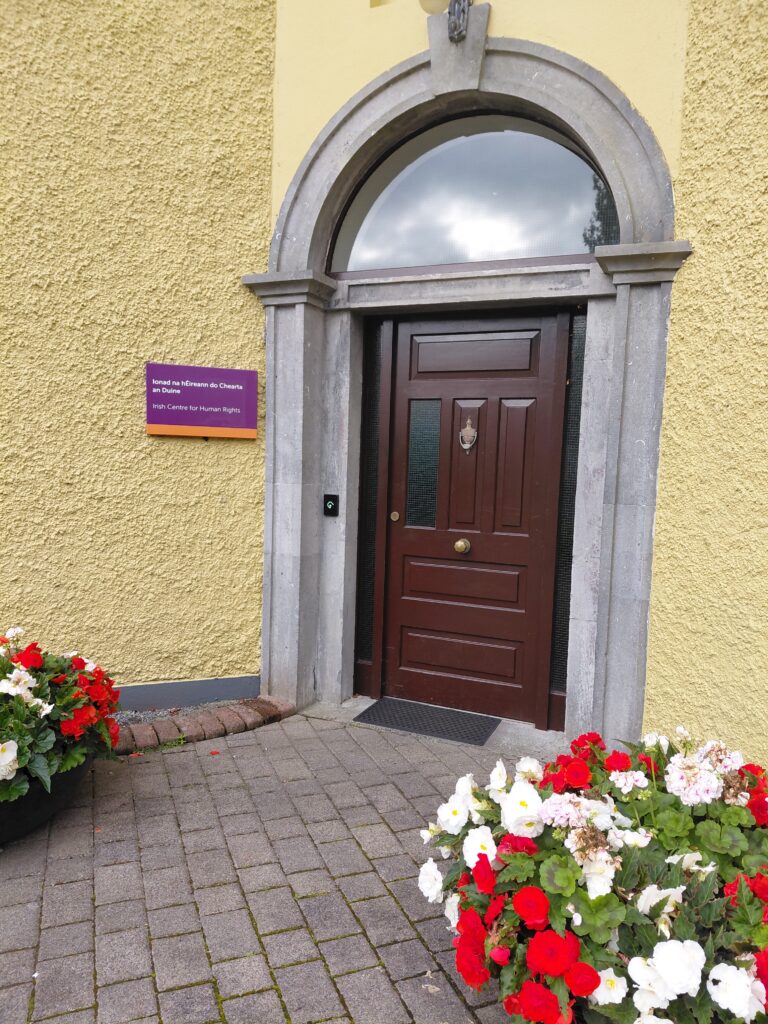
This summer a small group of HIDDEN members visited the Irish Centre for Human Rights at Galway University. The Irish Centre for Human Rights is an academic centre dedicated to the study of human rights, peace and conflict, international criminal law and humanitarian law, international refugee and migration law, gender and human rights and climate justice.
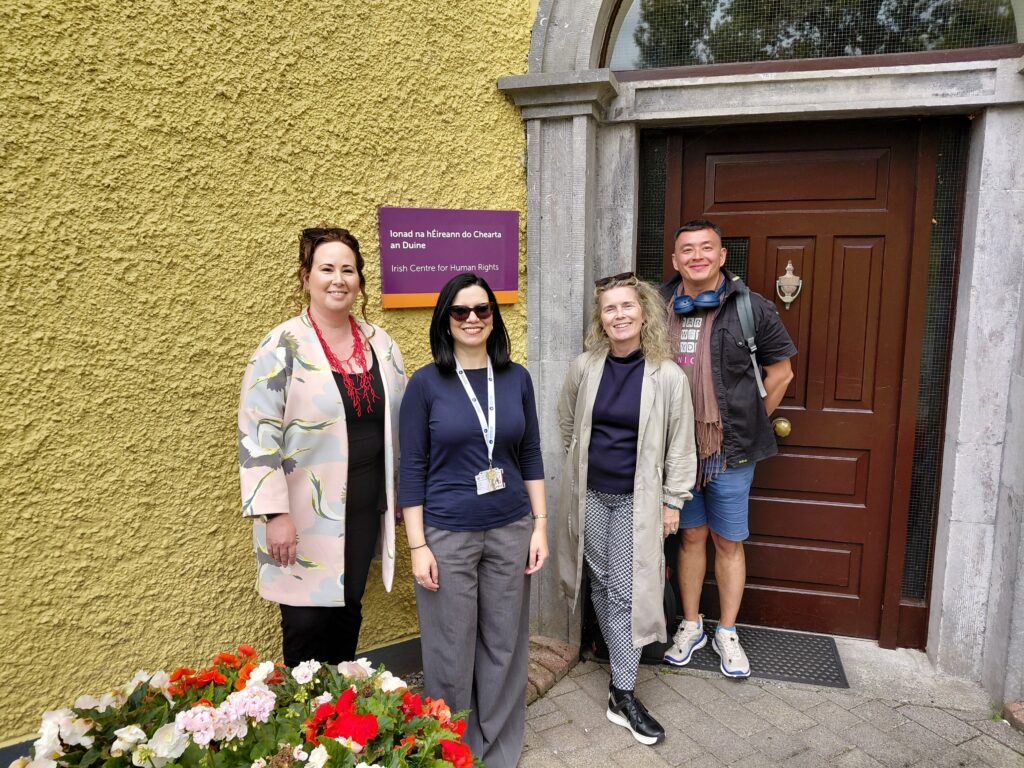
The event began with a welcome from the Chair, Dr Jennifer Redmond, who outlined the scope of the workshop and the aims of the visit. This was a chance for collaborative publications to be worked on and to hear about new research in the field of archives, ethics and human rights by early career scholars.
This visit was organised thanks to Dagmar Hovestadt, the keynote at the recent HIDDEN conference at Maynooth University, who is an adjunct professor there. Dagmar is working with renowned scholar Dr Maeve O’Rourke on a project related to archives, transitional justice and the long history of Mother and Baby Homes and Magdalen laundries in Ireland that incarcerated unmarried mothers and often facilitated illegal adoptions. As part of our visit on day one, HIDDEN members heard about the PhD work of student Mary Harneyat ICHR. Mary is studying under the supervision of Dr Maeve O’Rourke and is herself a survivor of institutional abuse. You can read more about Mary’s work here. Mary was invited by the President of Galway University to join an international advisory panel on truth recovery best practices for those that have suffered human rights violations. You can read an extract by Mary Harney from the essay “Testimony,” which opens the collection REDRESS: Ireland’s Institutions and Transitional Justice (edited by Katherine O’Donnell, Maeve O’Rourke and James M. Smith) published by University College Dublin Press by clicking here.
Dagmar Hovestadt also explained more about her role as an adjunct professor University of Galway which is focusing on issues of access to official documentation, questioning its engagement with the history of institutional abuse and highlighting issues of access to records for scholars and, most importantly, survivors of institutional abuses. As part of the first day participants also discussed what they would be writing on in the sessions dedicated to HIDDEN publication aims and shared vital resources to progress these projects.
We began our second day with a presentation by Shauna Mulligan, PhD student at University of Galway, who is working on a doctoral thesis on “Wartime Slavery and Race in the United States and Nazi Germany during the 1860s and 1940s: A Comparison of Robert Allston’s Chicora Wood Plantation in South Carolina (1861-1865) with Hans Aumeier’s Klooga Concentration Camp in Nazi Estonia (1941-1945)”. The title of her presentation was “Policies and Practices of Slave Labour and Racism during the American Civil War in South Carolina, 1861-1865, and the Second World War in Estonia, 1941-1945”. Shauna is currently working on her doctoral research project which is investigating the impact of the American Civil War in South Carolina from 1861-1865, with the impact of the Second World War in Estonia from 1941-1945 by comparatively analysing the different stages of slave labour production and racial policies of the American plantation and Nazi concentration camp during the two Wars. Her doctoral research project is fully funded by Research Ireland’s Government of Ireland Postgraduate Scholarship (2023). She is also a previous recipient of the Hardiman Research Scholarship, University of Galway (2022). Her academic background is in the history of modern race relations, unfree labour policies, human rights and international law, with a particular focus on modern United States and modern Germany. She has a MA, LLM and BA, all achieved at the University of Galway with the Department of History and the Irish Centre for Human Rights. This was a stimulating presentation and the group were able to share resources as well as learn about this groundbreaking new research in comparative global history.
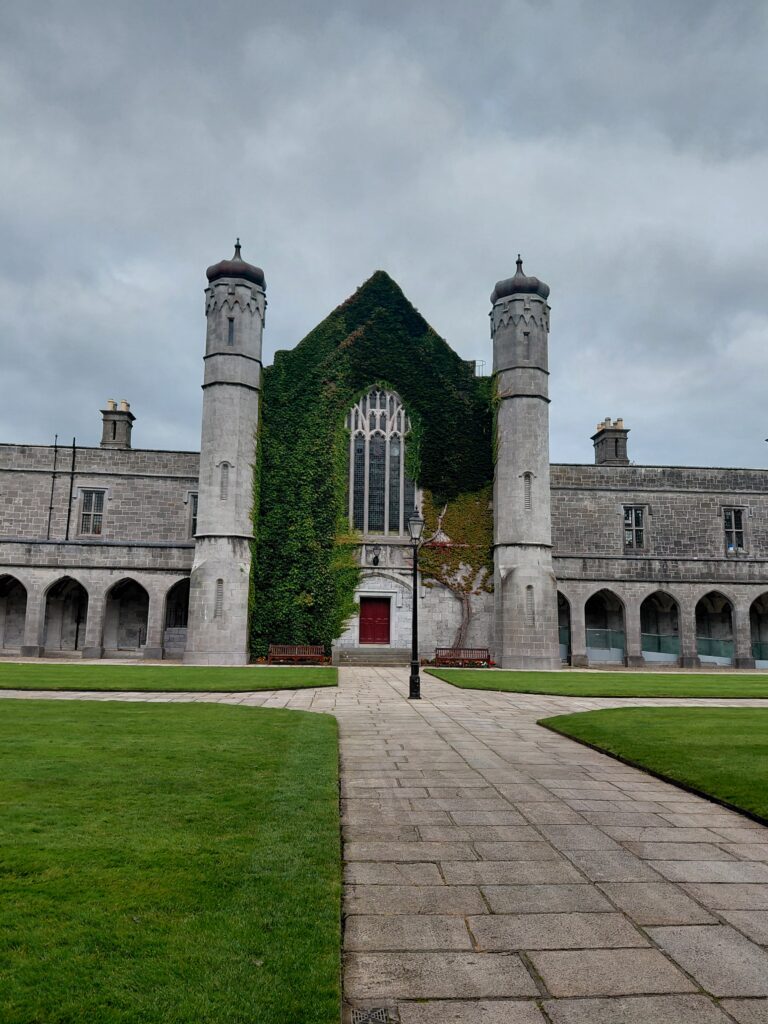
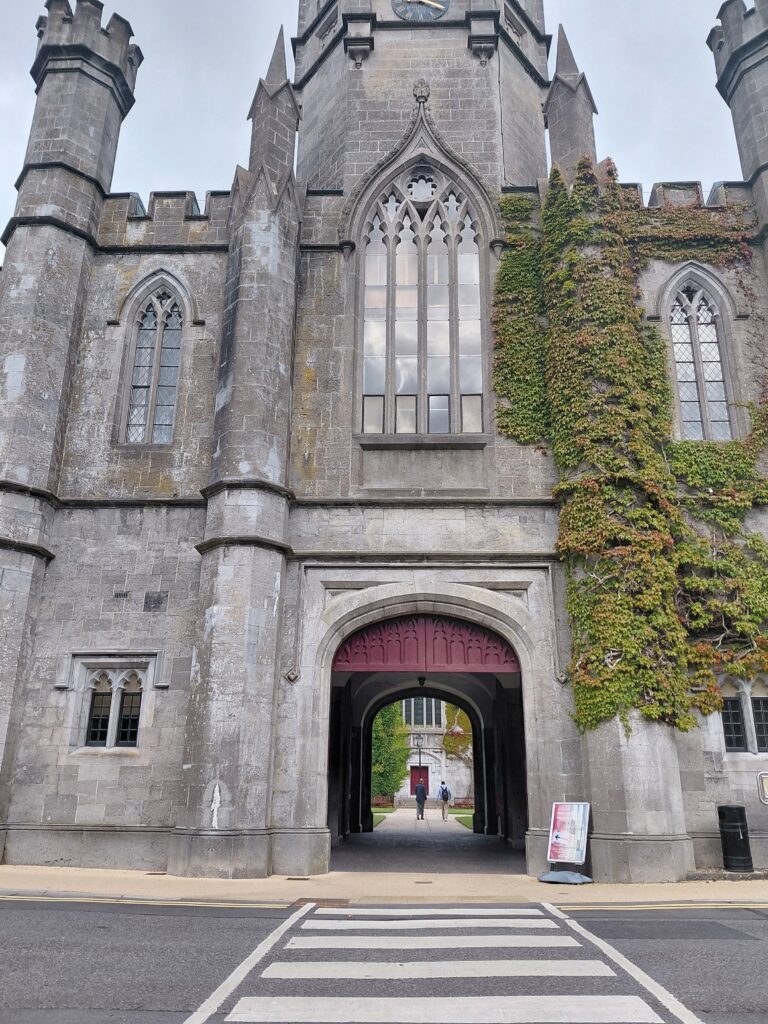
We are thankful to all at the ICHR for hosting our visit and will be planning future collaborations with the wonderful team of researchers there.

Leave a Reply