
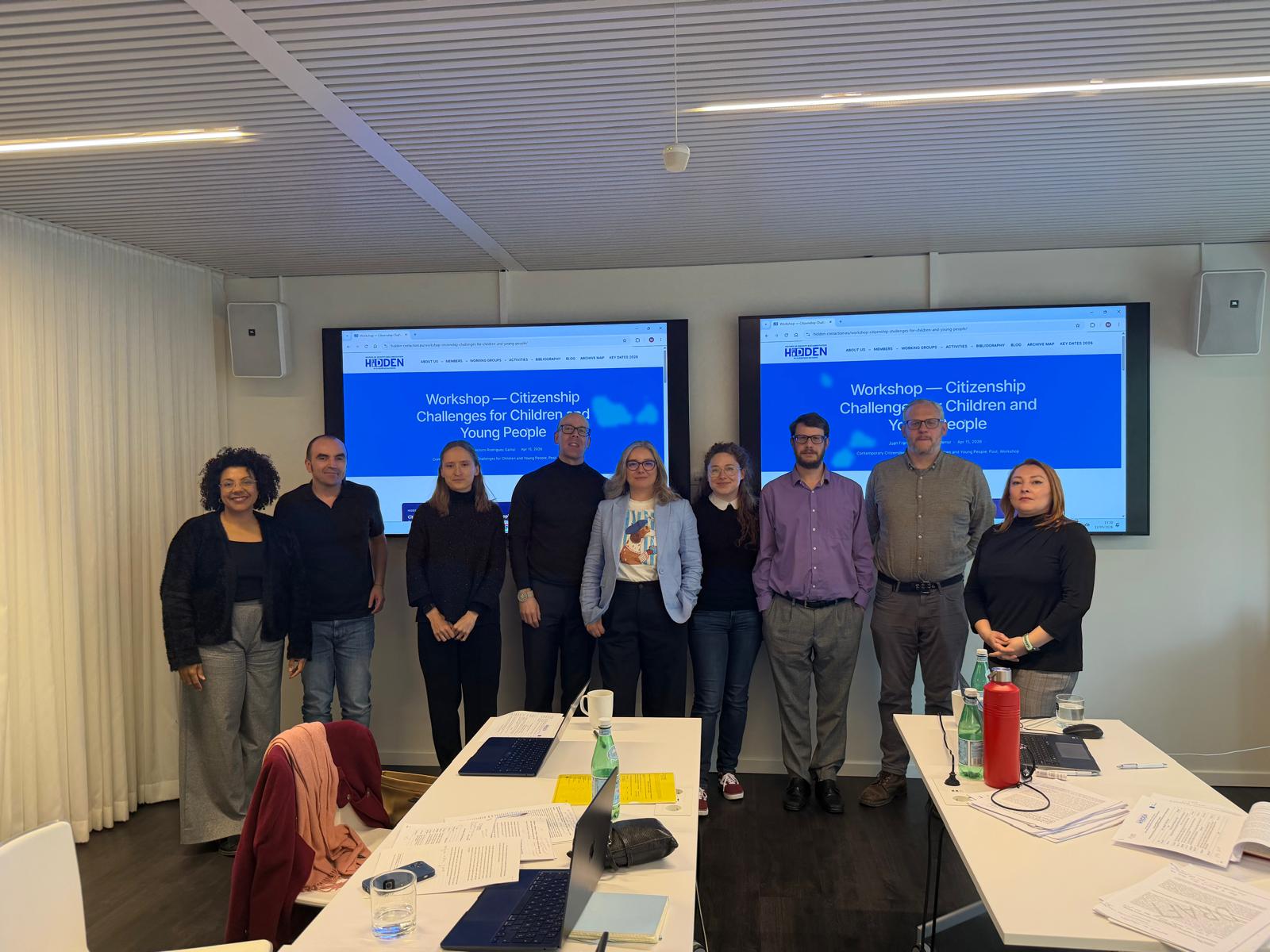
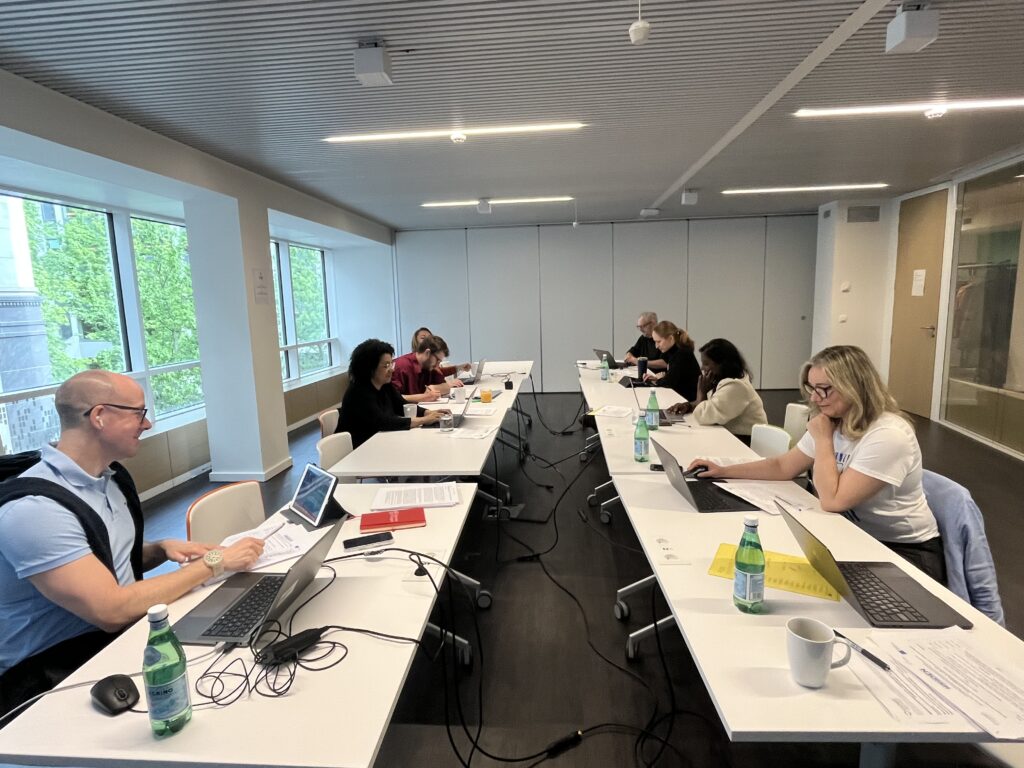
On Tuesday-Wednesday, 12-13 May 2026, WGs 2, 3 and 5 organised a workshop on Citizenship Challenges for Children and Young People: Barriers, Borders, and Bureaucracy in Historical and Contemporary Perspectives, hosted by the Norwegian University of Science and Technology office in Brussels, Belgium, and funded by HIDDEN COST. The discussion was based on pre-circulated papers from all members. The day began with a roundtable of introductions of the co-organisers (Prof. Michael J. Geary, Dr Susan Rottmann, Dr Beatrice Scutaru and Dr Aisling Shalvey) and all the participants. The contradictions between migration restrictions and children’s rights and protections, which we hoped to draw out from the papers over the two day workshop, were emphasised.
Some of the unifying questions we posed were on the conflict between legal provision for citizens and child welfare, particularly for children of migrants: What happens when this documentation becomes unstable or does not match the administrative requirements of the state? Why is children’s identity documentation considered a liminal one, reflecting their ‘becoming’ citizens, rather than being current citizens? What children’s citizenship does for them, and what does citizenship mean? Each paper was paired with a peer discussant where feedback was shared on draft papers in preparation for an edited volume.
The first day began with a paper from Fabio Macedo (Université d’Angers), Migration, Nationality, Gender and Care: Orphans and Abandoned Foreign Children and Their Mothers in France (1850–1914). He discussed the abandonment of foreign children in France and how “rights” were entirely absent from the welfare correspondence. This was framed in terms of regulating the migration of women and abandoned children.
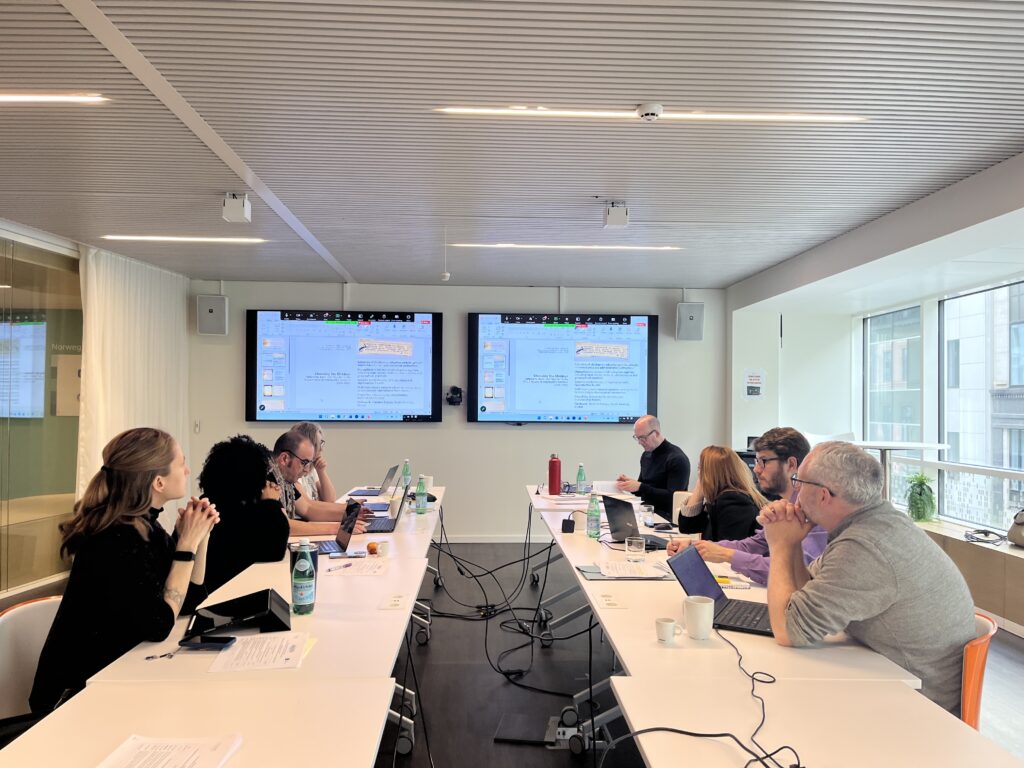
Hacer Elmacı (University of Leeds), Visualising the British Empire through Images of the Nation’s Children: A Critical Analysis of English School History Textbooks focused on visual representations of children in British history textbooks, and examined who is constructed as ‘other’ in this work, as a reflection of the history of empire.
Luciana Jinga (ICCMER/University of Bucharest), Paper Lives: Bureaucratic Violence, Humanitarian Aid, and the Reconstruction of Childhood in Post-Socialist Romania discussed the instability of records in Romania. She noted that the fragmentation of archival material has led to a long term impact on children’s rights and access to information on their own identity and birth families.
Tatiana Eremenko (University of Salamanca), Experience of Irregularity among Child Migrants in France took a quantitative data led approach to children’s undocumented status. She argued that age at arrival plays a major role in how child migrants navigate the legal frameworks of destination countries, as it determines their position relative to different legal regimes governing education, child protection, and immigration.
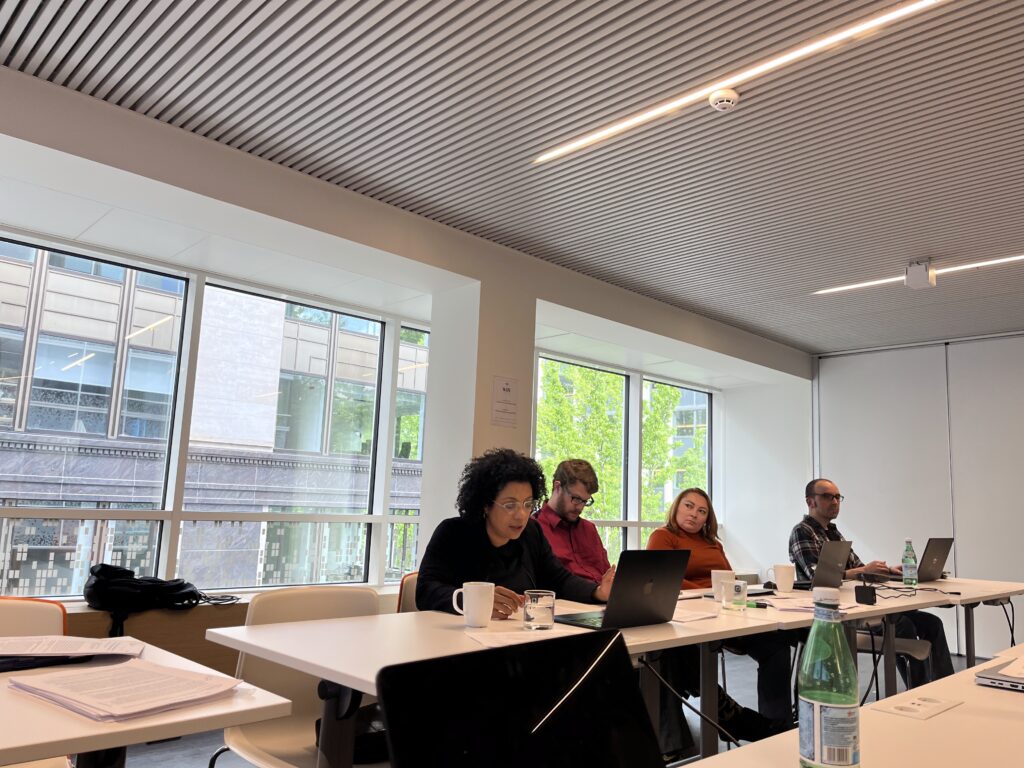
Andrew Jolly (University of Sheffield) and Jonathan Collinson (University of Birmingham) addressed how children of migrants’ experience of acquiring identity is a liminal one, not one grounded in legal status necessarily. They noted that there was an expectation that children are protected by their parents status or their documentation, which is not necessarily the case. They discussed the idea of hollow citizenship, as an antonym of social citizenship, where legal advice does not consider children’s citizenship as independent to their parents.
Stephanie Zloch (Dresden University of Technology), Compulsory Schooling as a Pathway to Belonging? Citizenship Challenges and Youth Agency in Germany’s Education System since 1945 discussed the construction of difference through schooling and education, and the conflict between compulsory schooling and the desire for separate schools for different ethnic and linguistic groups in West Germany. She outlined how the experience of integration was not always perceived in similar ways by youth with some poignant quotations from children themselves.
Lara-Zuzan Golesorkhi (University of Portland), Invisible in Transit: Educational Challenges for Children and Youth on the Move joined us online to discuss the example of migrant youth in Venezuela. She argued that belonging was integral to youth, and should not be conceptualised as a single event but as an ongoing relational experience, based on a transitory and enduring form of citizenship.
Olga Krysanova (ISCTE-IUL/NOVA)Motivation as a culturally informed factor in integration of refugee youths in Portugal discussed the difficulties in migrant youth integration. She argued that when status is considered temporal then there is little incentive to integration, so the migration experience itself should be seen as formative
Day two began with a joint bibliography session, as we recorded our collected literature for the HIDDEN COST bibliography deliverable.
April Maja Almaas (Norwegian University of Science and Technology), The challenges of Family Reunification Processes for Unaccompanied Refugee Minors as Seen by Employees in the Norwegian Health and Integration Services asked what barriers health and welfare workers encountered in facilitating family reunification processes in Norway.
Shila Khuki de Vries (Radboud University), “If we do not speak out, no one else will”: Dutch Adoptee Activism and its Impact on Intercountry Adoption Policy in The Netherlands presented a paper on the different forms of activism in the Netherlands, and how this emerged as a result of ineffective policy responses.
Tin Maung Htwe (Chiang Mai University), Administering Invisibility, Street-Level Bureaucracy and the Production of Statelessness in Ban Mai Nai Soi Refugee Camp, Thailand argued that structural marginalisation of children restricts their rights. They noted that this statelessness in the Ban Mai Nai Soi Refugee Camp is shaped bureaucratically by frontline officials.
Bridget Wooding Obmica (Observatory Caribbean Migrants, Santo Domingo), Contestation by Young People of New Legal Barriers for Access to Nationality in the Dominican Republic discussed anti-Haitian discrimination and the practices of exclusion from the civil registry.
Our group was impressed with the drafts that were sent, and noted the links between all papers, which promises to create an interesting edited volume.

Leave a Reply