This blog has been written by Dr Aisling Shalvey (Vice Chair) and Dr Jennifer Redmond(Chair) of the HIDDEN COST Action who organised the event alongside Vukašin Zorić
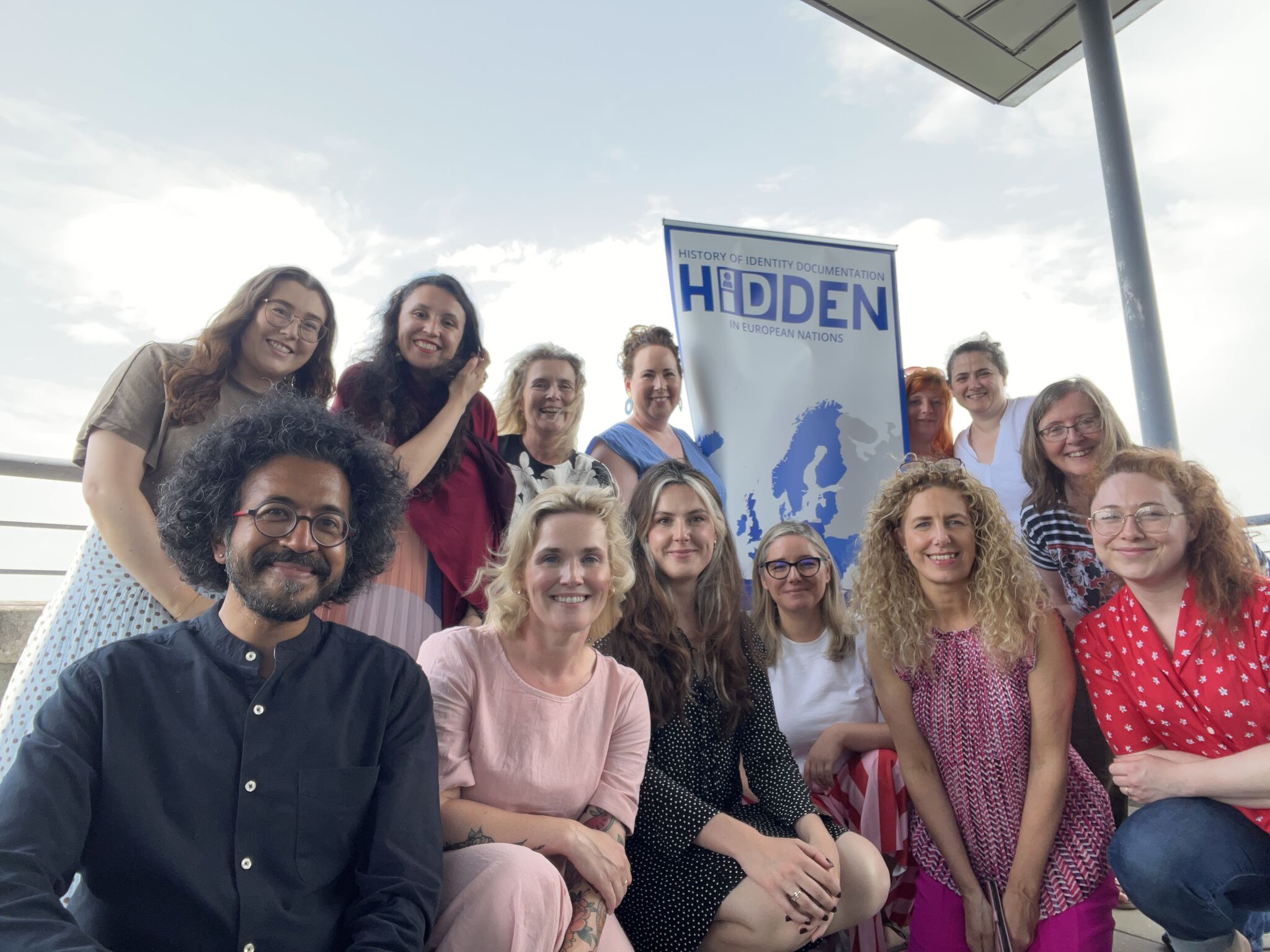
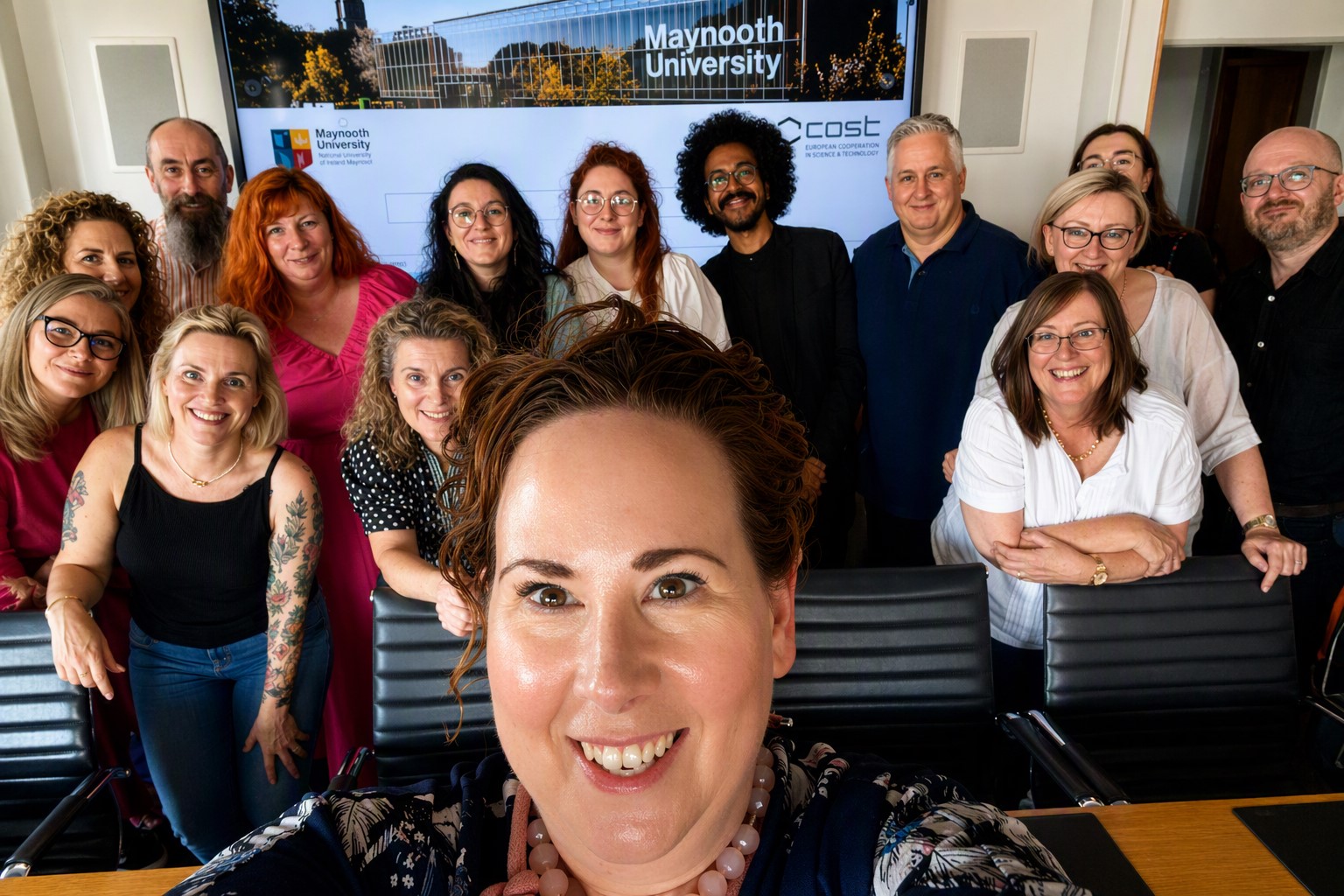
This training school brought together researchers with quantitative and qualitative expertise, legal and human rights experts, archivists, writers, data protection experts, theorists and those who are skilled in conducting empirical research with historians. The HIDDEN Training School on Historians, GDPR, ethical considerations and big data was led by Working Group 2: Documents as Proof, Documents as Past, as one of the last outputs of the network in Year 4 which was planned for in our initial MOU. Our aim was to better understand cutting edge interpretations of GDPR issues and ethical considerations of big data through this Training School. The participants received pre-circulated documents from trainers to facilitate discussion on the two-day training school. It was held at Maynooth University and facilitated by our Chair, Dr Jennifer Redmond. This is the last event to be held at the campus as part of the network.
The participants were Isabel Arce Zelada from University College Dublin, Jennifer Brady, Miriam Ryan, Megan McAuley, Adrienn Kovacs and Declan Monaghan from Maynooth University, Chiara Candaele from the Royal Netherlands Academy of Arts and Sciences, Victoria Coccozza and Paula Jones from the University of Strathclyde, Samarjit Ghosh from Ozyegin University, and Yvette dos Santos from NOVA University of Lisbon. This groups is a mix of doctoral researchers and early career scholars, working across a range of archives and personal data information settings in different European countries. This was a collaborative forum in which those leading the training also actively participated in other sessions, thus it was a form of training for everyone.
Our first day began with Commissioner David J. Murphy, Data Protection Commission, ‘Data Protection in the context of historical research’, chaired by Dr Jennifer Redmond, Maynooth University. In this, he answered questions from the trainees but also addressed practical examples of how GDPR was navigated in real life. One such example was that of the 1926 Census in Ireland, where centenarians were contacted and kept informed throughout the process for the publication of their personal data.
After lunch, Ciarán Quinn from Maynooth University Library discussed ‘Creating a Data Management Plan’, chaired by Dr Beatrice Scutaru, Universitat Autònoma de Barcelona, WG5 Co-leader. Ciaran shared online resources on how to create a data management plan, data repositories, as well as FAIR principles. One key takeaway from his presentation was that data management plans not only help in focusing a project, but also in protecting the researcher by illustrating a clear purpose for any data collected.
Dagmar Hovestadt from the Irish Centre for Human Rights, University of Galway presented on ‘Personal data and the archive. From the Stasi records to OSINT data’, chaired by Dr Aisling Shalvey, University College Cork, WG2 Co-Leader and Vice Chair of HIDDEN. The Stasi archives constitute, document and perform the legitimacy of the state. She walked through ascertaining access through an archival document in real time so we could understand the difficulty in data protection for multiple parties.
Day two began with a presentation from Pedro de Sa, Diocesan Archivist, Catholic Archdiocese of Dublin, ‘The Impact of GDPR on Diocesan Archives: Compliance, Preservation, and Access’, with Dr Jennifer Redmond chairing the session. He noted that archives are reflective of power structures of the era, and so ensuring access to them enhances understanding and transparency. The relationship between archive, archivist and researcher is to ensure the records can be understood and accessed responsibly and to lead to historical accountability. The presentation was given in the context of the new repository, the National Centre for Research and Remembrance (NCRR) which will be located on the site of the former Magdalen Laundry in Seán McDermott Street in Dublin’s city centre.
Some of the questions from the trainees reflected on long-term use and accessibility of records, and how to handle already archived and publicly available data that might not have received consent to be collected in the first place. What constitutes meaningful consent for re-use in historical research contexts? Participants reflected on how data often doesn’t just concern one ‘data subject’, particularly in archival work, which may impact families and communities in relation to privacy concerns. The consequences of data breaches, and the ethics of biometric usage and how that can be protected were discussed. What if a project has a temporal scope dealing with people who are definitely deceased, but also with people who could be alive, for example in genealogical research? What is current best practice in approaching private archives and family collections that may not have had data protection training? How can we reconcile data protection and ethical use of information with dissemination of academic and scientific knowledge? The difficulty of weighing up naming people (who are no longer alive and thus not applicable for GDPR), anonymising or pseudonymising people in historical work is an ethical question that concerns our group.
To end day two, Dr Aisling Shalvey from University College Cork spoke on ‘Protecting or naming the patient: GDPR and medical humanities’, with Dr Beatrice Scutaru as chair, Universitat Autònoma de Barcelona, WG5 Co-leader. She discussed how historical medical data is in a type of middle ground when it comes to ethics and GDPR, and while not considered private personal records, nonetheless must be dealt with ethically. One contribution from the training school was a session on relevant guidelines and secondary readings which will inform our upcoming resource list, available on our website soon, watch this space!

Leave a Reply