
Elizabeth Challinor[1]
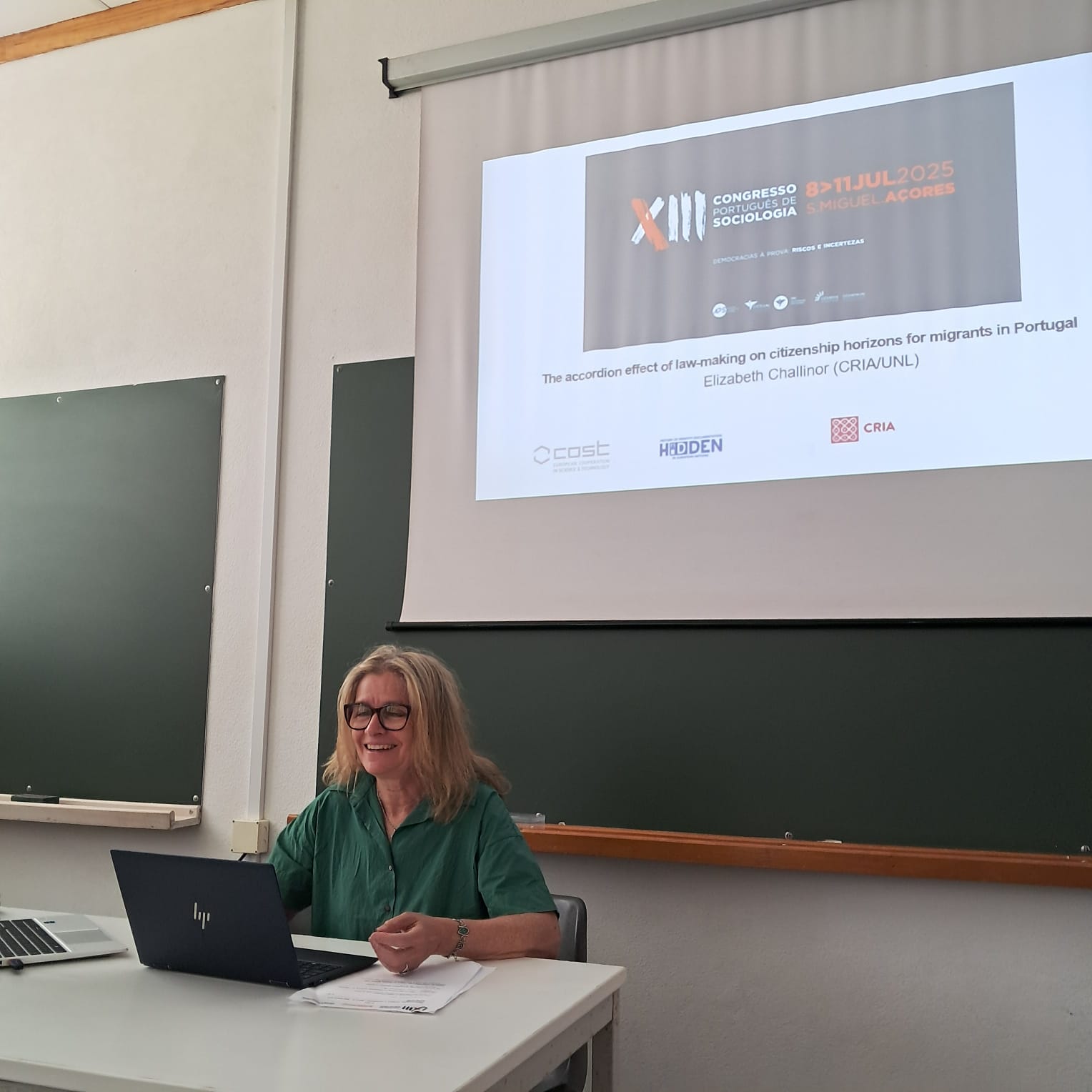
My recent presentation at the XIII Conference of the Portuguese Sociology Association, “Democracies on Trial: Risks and Uncertainties”, explored citizenship beyond its conventional legal definition. I argued that citizenship functions as a “guiding horizon”—a forward-looking concept that shapes how individuals perceive their rights and sense of belonging. Despite this, the formidable power of national citizenship persists, often making universal human rights contingent on the actions of the state. My research in Portugal highlights this dynamic through what I term the “accordion effect” of law-making on the citizenship prospects of Lusophone migrants. This phenomenon challenges the notion that rights are exclusively tied to formal citizenship, aligning with Bloom’s (2019) concept of “noncitizenship,” which focuses on the justifications for exclusion rather than solely on inclusion.
A compelling case from my fieldwork illustrates this complexity. An undocumented Cape Verdean migrant in Lisbon faced a dilemma between two legalization pathways. She hesitated to follow the advice of a frontline worker, swayed by contradictory information circulating “on the street.” The options were:
- Article 88 (Expression of interest): A well-established but slow route (over two years) for undocumented migrants with work contracts.
- CPLP Residence Certificate: A newer, faster option (72-hour online issuance) for citizens of Portuguese-speaking countries, facilitated by a 2021 free movement agreement. Crucially, it was initially promoted as valid for Schengen Area travel
The promise of Schengen travel led thousands to switch to the CPLP certificate. However, official information on its Schengen validity was later retracted, and the EU questioned its non-standard format. This left CPLP holders in a precarious limbo, facing suspicion from employers and landlords despite holding a legal document in Portugal.
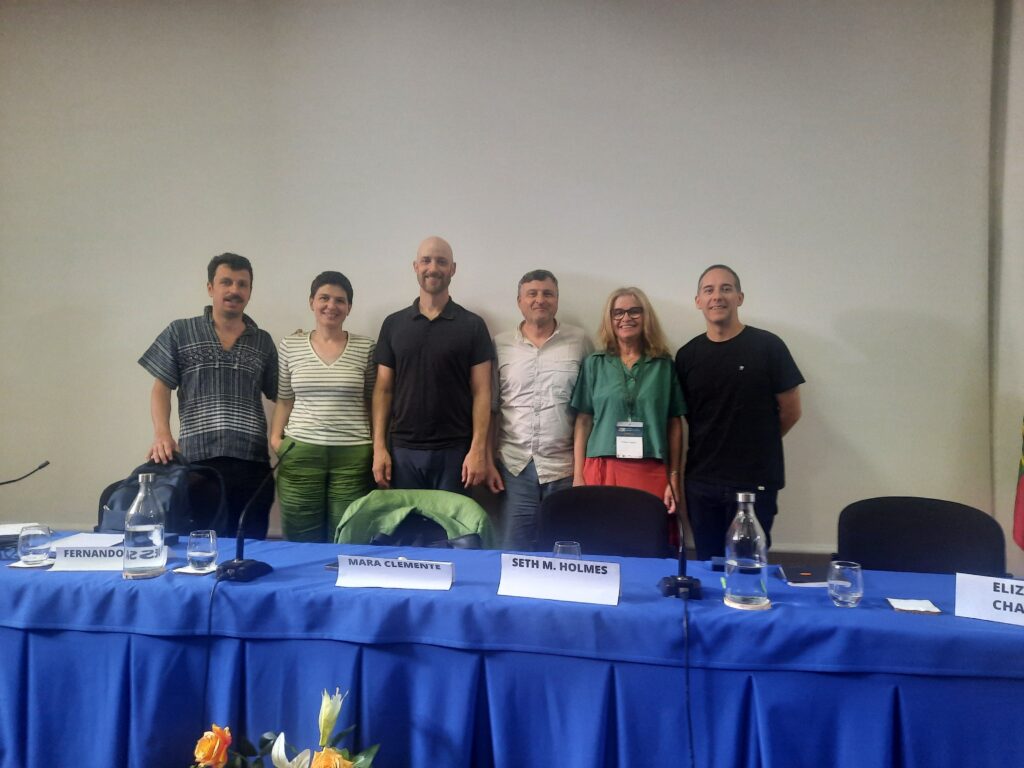
The Cape Verdean woman’s subsequent missed appointment and a Brazilian migrant’s deliberate choice to stick with the slower Article 88 route reveal a profound distrust in the state. This “accordion effect”—where legal frameworks expand and contract—forces migrants to make critical life decisions based on incomplete and contradictory information, placing an immense burden on them. This scenario exemplifies “noncitizenship,” where the state’s failure to uphold promised rights leaves individuals vulnerable and unable to achieve their full potential. It is not merely about legal status; it is about the state’s responsibility to individuals. When official announcements shift and promises are broken, migrants are left in an unstable, unpredictable legal environment. The state’s inability to deliver on its word erodes trust and highlights how the enforcement of fundamental human rights is intrinsically linked to state actions and national legal frameworks. Mara Clemente´s presentation, at the same table, on the “counter-trafficking anti-politics machine” in Portugal further elucidated these issues.
The conference addressed democracy’s risks from various angles. Keynote speaker Susan Benech, founder of “The Dangerous Speech Project,” discussed countering online hate to foster democratic discourse and influence the “moveable middle.” In a semi-plenary, entitled “(De)globalization, inequality, citizenship: the extraction of labour”, the need to theorise solidarity across difference was promoted by Seth Holmes who argued societies are built through diversity, while Fernando Bessa offered a panoramic critique of “globalization.” Both agreed that exploitation extracts not only labour but life itself from workers. This brings us back to the HIDDEN topic of ID – it may not be a panacea, but neither can its importance for securing rights be downplayed.
Reference
Bloom, T. (2018). Noncitizenism. Recognising Noncitizen Capabilities in a World of Citizens, New York, Routledge.
[1] Researcher at Centre for Research in Anthropology, CRIA, New University of Lisbon, CRIA-NOVA FCSH / IN2PAST. Research financed by FCT within the CRIA strategic plan, (UIDB/04038/2020; 2021.02343.CEECIND, https://doi.org/10.54499/2021.02343.CEECIND/CP1701/CT0002)

Leave a Reply