
Dr. Evgenii Shtorn
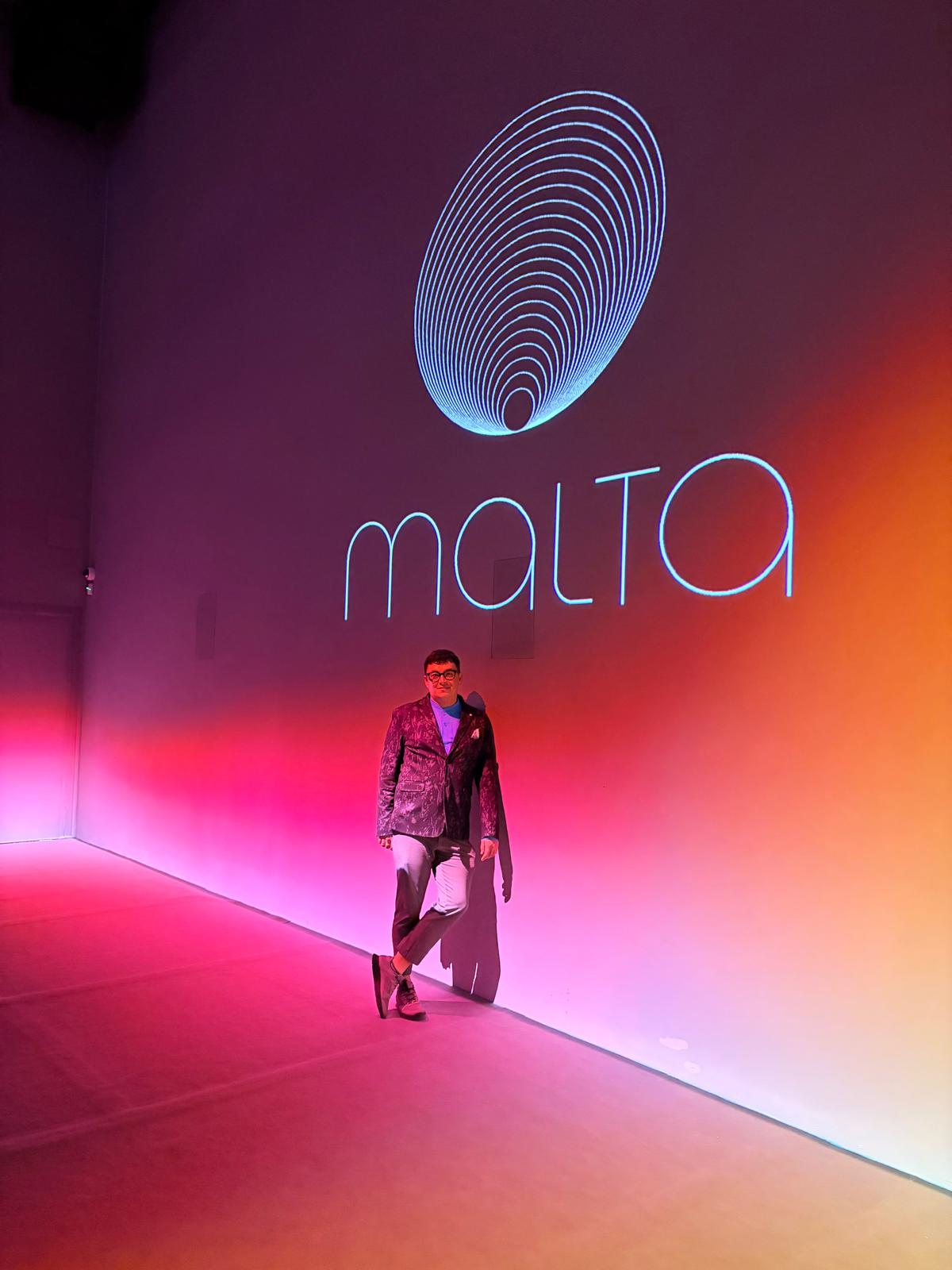
Between 7 and 19 March 2026, I carried out a Short-Term Scientific Mission in Malta in collaboration with Dr Ibtisam Sadegh, within the COST Action framework on citizenship and identity documentation. The initial objective was relatively clear: to advance a joint article on same-sex marriage and family migration in the European Union. What unfolded during the mission, however, was less a straightforward research trajectory and more a gradual displacement of the question itself. Rather than asking how rights are granted, the material increasingly compelled a different question: how do rights fail to travel?
At the centre of the project is a married same-sex couple residing in Malta. Their situation appears, at first glance, to exemplify the normative success of European legal frameworks. They are legally married. Their relationship is recognised. They are, in formal terms, protected. Yet the empirical encounter with their everyday life reveals a persistent disjunction between recognition and its effects.
One partner holds EU citizenship. The other is a citizen of a country where homosexuality is criminalised (I do not name it purposefully to protect the informant from any potential consequences) and is unable to renew his passport due to residing abroad in a same-sex marriage. This is not an incidental bureaucratic complication but a structural impasse. Consular authorities require documentation that, once provided, renders the applicant ineligible. The fact of marriage becomes, in this context, not a basis for protection but a reason for refusal. Returning to the country of origin is not a viable option due to the risks associated with criminalisation. The result is a condition that exists in the interstices of legal categories: a person who is present but not fully documented, recognised but not fully legible, protected but not fully secure.
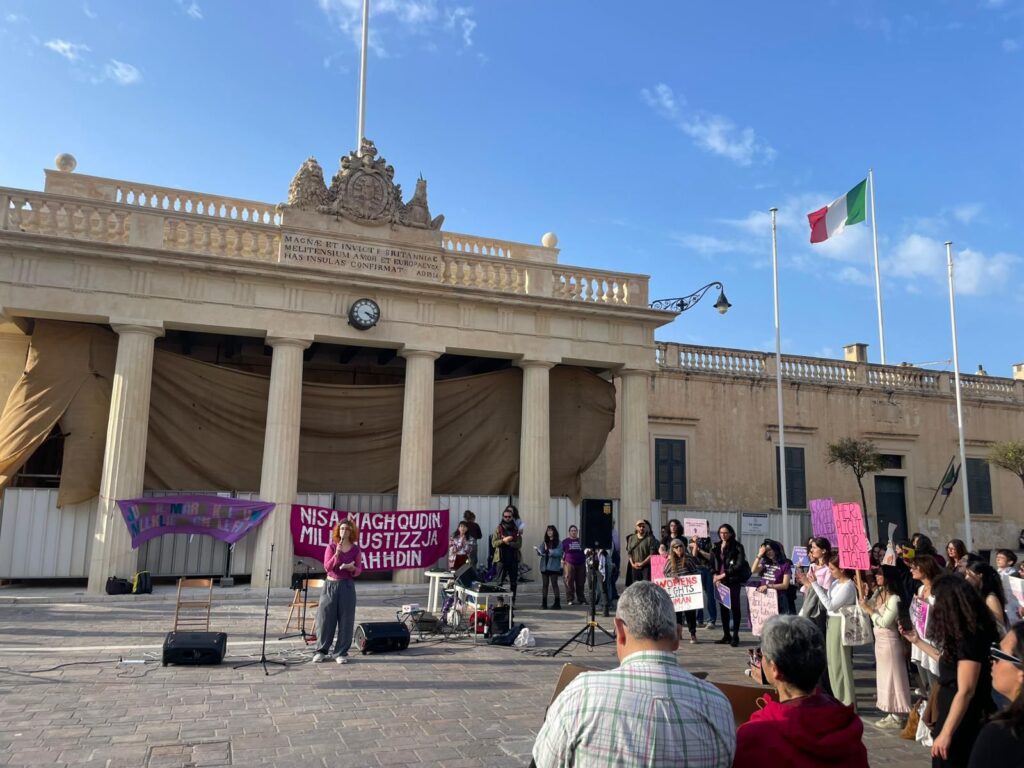
During the mission, six people were interviewed, including the couple whose experience anchors the research. Additional conversations with activists and a social worker from a local LGBTIQ+ support organisation, as well as a field visit to a refugee accommodation facility, provided a broader frame within which this case can be understood. These encounters did not simply add context. They revealed a pattern.
Across different positions, a similar dynamic emerged: rights do not disappear, but they are redistributed, filtered, and, at times, suspended. They are not uniformly accessible. They depend on documentation, on timing, on interpretation, on the capacity to navigate institutional systems.
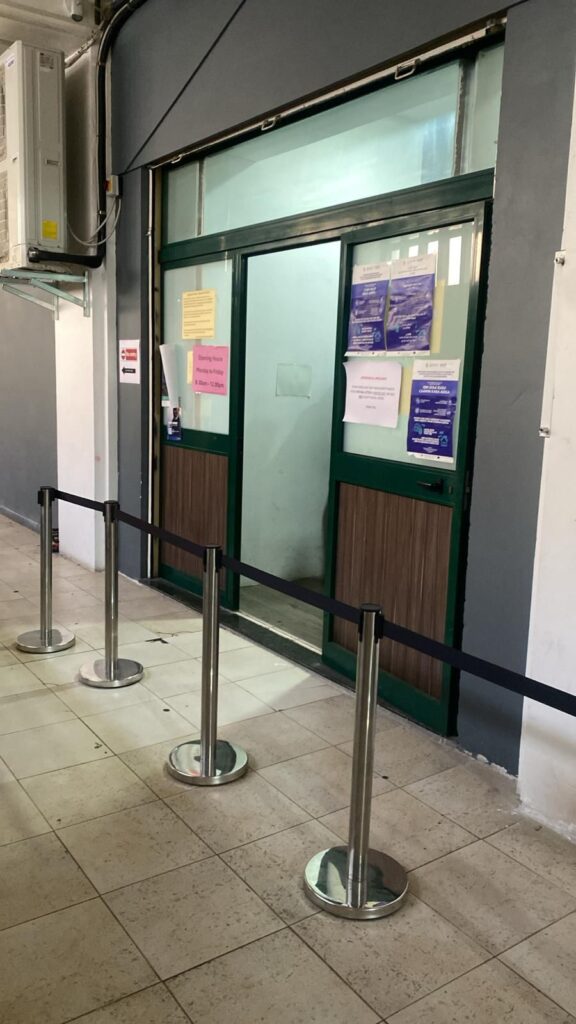
As one interlocutor noted, the moment migration status enters the picture, “the right changes completely.” This formulation is deceptively simple, yet analytically precise. It suggests that rights are not stable attributes but relational effects, contingent on one’s position within overlapping legal and administrative regimes.
Marriage, in this sense, does not operate as a singular legal status. It is refracted through multiple layers of governance. For EU citizens, it may function as a relatively secure foundation for family life. For third-country nationals, it becomes conditional, often dependent on proof of cohabitation, financial arrangements, or discretionary assessments by authorities. For asylum seekers, it may be entirely inaccessible. The same institution, formally universal, produces differentiated outcomes.
The case at the centre of this research makes these distinctions particularly visible. The inability to renew a passport transforms a legally recognised spouse into someone whose mobility is effectively suspended. Movement becomes impossible. Administrative procedures accumulate without resolution. Time itself becomes a mechanism of control. As one participant described it, the experience is not only one of restriction but of stasis: “you are here, but you are stuck.”
This condition resonates with, but also complicates, existing discussions on de facto statelessness. The individual lacks access to the basic instruments of citizenship, including valid documentation and the ability to travel. At the same time, they remain embedded within a legal framework that recognises them in other respects. What emerges is not absence, but fragmentation. Citizenship is not withdrawn; it is partially operational, unevenly distributed across domains.
Attempts to resolve this situation through alternative routes further expose the inconsistencies of the system. In some EU member states, limited forms of recognition may be possible. In others, the same case becomes unintelligible within existing administrative categories. The problem is not simply restrictive law, but the lack of coordination between legal systems. Rights are produced within one jurisdiction but rendered ineffective in another. They do not accumulate. They collide.
Malta provides a particularly revealing site for observing these tensions. It is frequently cited as one of the most progressive countries in Europe in terms of LGBTIQ+ rights. At the same time, it operates within a migration regime characterised by stratification, discretion, and administrative layering. Several interlocutors pointed to the gap between legislative frameworks and everyday practice. Access to rights depends not only on what the law states, but on how it is implemented, interpreted, and mediated through documentation systems.
This gap is not merely technical. It has a social and affective dimension. Uncertainty becomes a condition of life. Planning is deferred. Decisions are postponed. The future is held in suspension. For those in such situations, legal status is not a stable foundation but an ongoing negotiation. One lives not within the certainty of rights, but within their provisionality.
These observations extend beyond the central case. Discussions with practitioners also highlighted difficulties faced by trans individuals whose identity documents do not align with their gender identity, as well as broader challenges encountered by migrants navigating complex administrative systems. In each instance, documentation emerges as a critical site where recognition is either enabled or denied. It is through documents that rights are activated, and it is through their absence or mismatch that rights are effectively suspended.
Methodologically, these insights have led to a reorientation of the project. The research has developed into a single case study that does not seek representativeness in a statistical sense, but rather analytical depth. The aim is not to generalise from one case, but to use it as a lens through which broader structural dynamics can be examined. By tracing how different legal regimes intersect in one life, it becomes possible to observe the limits of rights-based frameworks in a particularly acute form.
The material collected during the STSM is now being analysed as part of a co-authored article currently in preparation. The intention is to situate this case within interdisciplinary debates on sexual citizenship, migration regimes, and statelessness, while remaining attentive to the specificity of lived experience.
If there is a provisional conclusion to be drawn, it is that equality, as a legal principle, is not inherently mobile. It does not travel seamlessly across borders. It does not attach equally to all bodies. It is mediated, translated, and, at times, interrupted. For those navigating multiple legal systems simultaneously, rights are not simply granted or denied. They are reconfigured in practice, often in ways that expose their limits.
The question, then, is not only whether equality exists, but how it operates under conditions of legal fragmentation. What becomes visible in this context is not the absence of rights, but their uneven life.

Leave a Reply