
Training School on Contemporary Citizenship Challenges for Children and Young People
Blog by Prof. Michael J. Geary (WG 3) and Dr Beatrice Scutaru (WG 5)
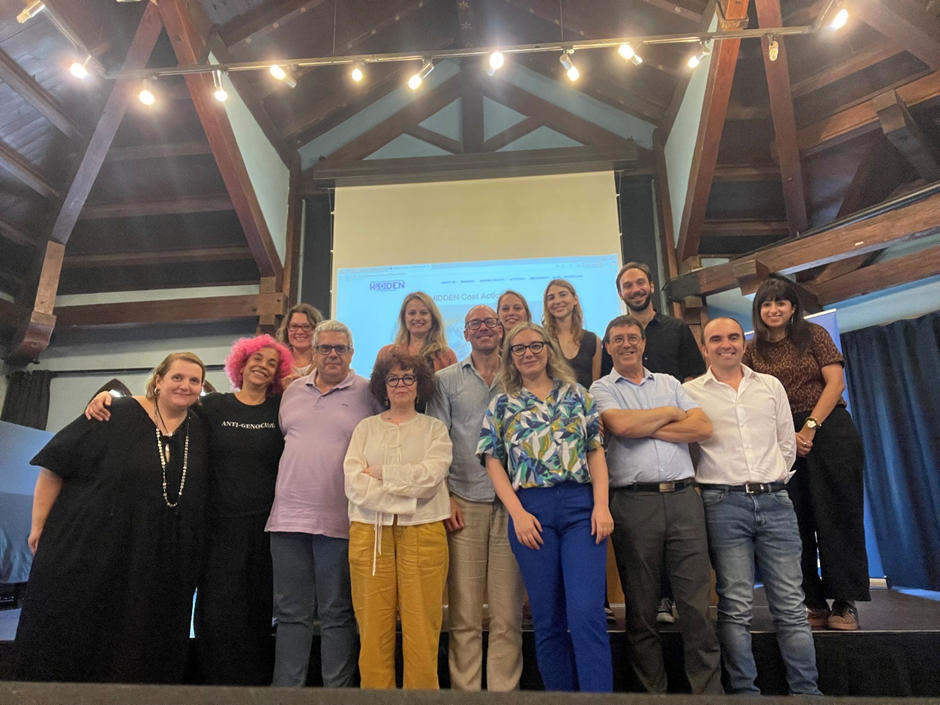
(Photo credit: Beatrice Scutaru)
On Monday-Tuesday, 15-16 September 2025, WGs 3 and 5 organised a Training School on Contemporary Citizenship Challenges for Children and Young People, hosted by the Universitat Autònoma de Barcelona, in Spain.
The first day started with a training by Prof. Yves Denéchère (Université d’Angers) entitled ‘Étudier l’adoption des mineurs en France au risque des pratiques illicites / Examining the Adoption of Minors in France and the Dangers of Illicit Practices’. The session explored the emergence of the history of intercountry adoptions (ICA) as an academic field in France and the AdoptRisk project (2025-2029) that will explore illegal practices in the national and international adoption of minors in the 20th century. Drawing on his recognised expertise and extensive research on ICA, Denéchère emphasized the delicate balance required when working on this highly sensitive topic. Researchers face pressure from multiple sides: some actors are wary of potential revelations which might incriminate them, while others attempt to instrumentalise scholarship, while critics often accuse historians of being either too timid or too radical. Moreover, this crucial research does not always receive the necessary institutional or financial support. Denéchère also emphasised the social interest of this research which responds to a growing demand to understand what happened and why. AdoptRisk funded by the French National Research Agency aims to do just that, by provide adoptees, families, and the wider society with the tools to situate individual life stories within a reliable historical context.
Although it emerged in the mid-twentieth century, ICA began receiving sustained attention from historians only in the 2000s. Until then, the topic had been mainly addressed by psychologists, anthropologists and legal experts. While the number of ICA has been in steady decline worldwide, interest in the topic continues to grow among researchers, adoptees, families (both adoptive and of birth), state institutions and various intermediaries. Denéchère’s scholarship has been pioneering in France. In 2011, he published the first history of intercountry adoption in France, and together with Dr. Fabio Macedo (who also took part in the training school), he conducted the first historical study of illicit practices in French ICA (2023). This research directly informed thefirst official French report on illegal practices in intercountry adoption (2024).
The second training was entitled ‘Illegal Intercountry Adoptions in the EU: Lessons for Research and Policy Reform by Dr. Elvira Loibl (Maastricht University) that examined the history, practices, and legal controversies surrounding intercountry adoption (ICA), with particular focus on the Dutch and German systems. Intercountry adoption emerged in the mid-20th century as a humanitarian response to wars and later expanded due to poverty, social policy shifts, and natural disasters. While ICA peaked in 2004 with 45,000 cases, numbers dropped to fewer than 3,000 by 2023. However, from the 1970s onward, rising costs and growing demand fostered widespread illegal and commercial practices, particularly in Latin America and Eastern Europe, prompting the 1993 Hague Adoption Convention. Despite this, abuses persisted. Loibl’s PhD research (2014–2018) analyzed laws, policies, and practices through doctrinal study and 29 expert interviews. Findings revealed structural problems: adoption agencies’ financial dependence and ideological commitment to “rescuing” children, unrestricted flows of Western money incentivizing abuse, limited oversight of foreign partners, and excessive reliance on the Hague Convention. This created a “blind trust” in sending countries, even where corruption was evident. In the Netherlands, the Joustra Commission (2019–2021) investigated past ICA practices, leading to an official apology and suspension of adoptions. A later shift reinstated a restricted adoption system, but in 2024 the Dutch parliament voted to abolish ICA altogether. Meanwhile, adoptees continue to demand reparations, with legal disputes highlighting tensions between moral acknowledgment and denial of legal responsibility. The training concluded with a focus on unresolved issues: the extent of state legal and moral responsibility, inconsistent application of human rights law, and the need to define victims and effective redress mechanisms. Loibl calls for deeper historical, normative, and empirical research to guide future policy and ensure justice for adoptees.
The training delivered by Daniel Franco Sánchez (Editorial Graviola) ‘In the Name of Identity explored the complexities of identity and belonging, particularly through the experiences of migrant youth. It was structured around reflective exercises, dialogues, and literary references to encourage participants to examine personal and collective narratives of identity. The session objectives were to reflect on the elements that shape belonging, recognize the multiplicity of identities, explore narratives of personal and cultural connection, and create spaces for symbolic co-creation. Participants were asked to consider what makes them feel connected to their culture or place of origin and whether these elements provide a complete or final definition of the self. Poetic and literary works, such as Imtiaz Dharker’s Front Door, highlight the daily negotiation of language, culture, and adaptation in migrant lives. The notion of multiple identities is emphasized through the intersections of personal memory and experience, cultural values and traditions, and national citizenship. Quotations from authors like Amin Maalouf challenge binary notions of identity, asserting the coexistence of multiple affiliations. The presentation further interrogates the common question “Where are you from?” as posed to migrants. Rodrigo Soto critiques the assumption behind the question, suggesting that identity cannot be reduced to a single geographical answer. Instead, identity emerges from diverse experiences across multiple places. Similarly, María Rosa Lojo’s poetic narrative situates identity within layers of family memory, migration, and intergenerational stories. The closing section, Building Bridges, asked trainees to reflect on what others demand of them in order to belong, and conversely, what they expect of others to feel included. Overall, the training emphasized identity as fluid, relational, and co-created, challenging simplistic categorizations and highlighting the richness of migrant narratives.
The training provided by Dr Cristina Santinho, (University of Lisbon) ‘Conducting Research with Unaccompanied Refugee Minors within an Institutional Context: Challenges and Insights’ explored the lived realities of young refugees, the methodological approaches used in research, and the challenges posed by changing political contexts. The training examined minors in creative workshops, asking them to design masks symbolizing their outward personas and inner worlds. These activities revealed tensions between resilience and vulnerability: while many presented cheerful exteriors, their inner expressions reflected sadness, trauma, or struggles to articulate feelings. Artistic exercises, such as drawings, captured themes of memory, family love, and experiences of displacement. A global overview highlighted alarming figures: in 2024, 123.2 million people were forcibly displaced worldwide, nearly 49 million under 18. In 2023 alone, 35,500 unaccompanied children arrived in Europe (64% of all refugee minors), with 33,180 asylum applicants formally recorded. Portugal hosted 205, mostly boys. These statistics underscored the scale of the challenge and the urgency of tailored protection policies. Fieldwork was conducted at the Centre for Refugee Children, linked to the Portuguese Council for Refugees. Participants reflected on critical issues such as age assessment procedures, bureaucratic delays in issuing documents, and the social, legal, and cultural consequences of administrative inefficiencies. The exercises also explored gender, culture, and religion in shaping refugee children’s experiences. The study further highlighted the deteriorating context in Portugal after the 2025 election of a right-wing, far-right coalition. Once considered a model of humane refugee policy, the country has shifted toward restrictive asylum measures, slow and opaque bureaucratic processes, institutional closures, and rising xenophobia. Families are now sometimes held at airports, with minors institutionalized. Research projects, too, face uncertainty due to the abrupt closure of the Foundation for Science and Technology (FCT). The presentation concludes by stressing the urgent need for supportive structures, rapid documentation, and recognition of minors’ voices in shaping policies affecting them.
The second day of the training school focused to the theme of statelessness.Dr. Jesús Tolmo García’s session was entitled ‘Children without a State: Gaps and Policy Challenges in Europe’. His training drew upon both his PhD research and professional experience as a statelessness consultant for the UNHCR and as Coordinator of the International Protection Legal Service at Fundación Cepaim, a Spanish NGO that manages more than 4,000 reception places for asylum seekers, refugees, and stateless people. Tolmo began by providing an overview of the definitions, meanings, and implications of statelessness, as well as the main international legal frameworks, including the 1951 Refugee Convention, the 1954 Convention relating to the Status of Stateless Persons, and the 1961 Convention on the Reduction of Statelessness. He then introduced several case studies involving children who were born or had emigrated to the EU, highlighting the complex challenges they face. Particular attention was given to the limitations of certain forms of legal protection available to children worldwide, the implications of political recognition, such as how the recognition of Palestine can affect the legal status of children born in Spain, the ways in which lawyers must navigate overlapping national and international legal systems to determine what best serves the interests of the child and the severe impact of lack of access to documentation, which affects not only legal rights but also the everyday lives of stateless persons. Tolmo’s session underscored the legal, political, and human dimensions of statelessness in Europe, particularly for children, and the urgent need for coherent policies and practices that safeguard their rights. As a follow up to the Training School, WGs 2, 3 and 5 have launched a call for papers: Citizenship Challenges for Children and Young People: Barriers, Borders, and Bureaucracy in Historical and Contemporary Perspectives.
