Reflections on the HIDDEN Training School in Naples
University of Naples Federico II, Department of Law (Cicala Hall)
20–21 May 2026
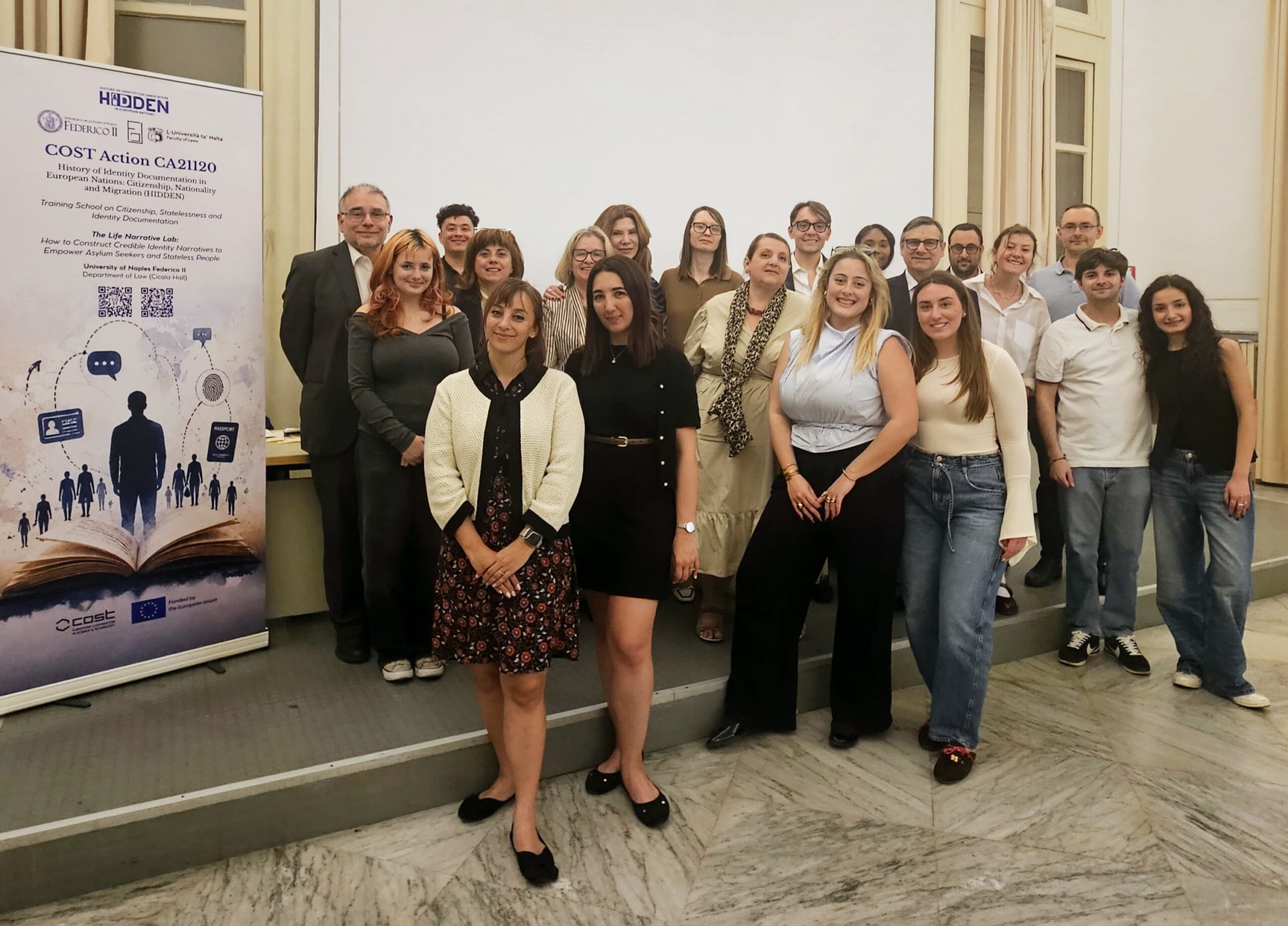
How do you prove your identity when you have no documents? For millions of asylum seekers and stateless people around the world, this is a daily challenge, not just a theoretical issue. This pressing reality brought together lawyers, academics, judges, clinicians, and students from across Europe at the HIDDEN COST Action Training School on Citizenship, Statelessness and Identity Documentation, held on 20 and 21 May 2026 at the historic Cicala Hall of the University of Naples Federico II.
With the theme The Life Narrative Lab: How to Construct Credible Identity Narratives to Empower Asylum Seekers and Stateless People, the two-day school created a unique space where legal expertise and personal storytelling worked together as partners.
The event began with warm welcomes from Carla Masi, Director of the Law Department at the University of Naples Federico II, Ibtisam Sadegh from the University of Malta representing the HIDDEN COST Action, and Flora Di Donato, who introduced the Training School and set the tone. From the start, it was clear that this gathering was motivated by real commitment—not just to scholarship, but especially to the people whose stories are often misunderstood, doubted, or unheard.
Day One: Law, Narrative, and the Space Between
The first day gave a clear view of the challenges asylum seekers face today. Chiara Di Stasio (University of Brescia) started with an in-depth look at the right to asylum after the EU Pact on Migration and Asylum, focusing on how ideas like safe countries and border procedures are changing the work of legal clinics. Next, Chiara Girardi and Michela Tuozzo (University of Naples Federico II) discussed the constitutional aspects of asylum and how rights protection can extend beyond borders.
Luigi Migliaccio from the Unions des Avocats Européens shared a practitioner’s view, introducing the maieutic method, which uses a Socratic style of interviewing and values active listening to find the truth. Elsa Lechner (University of Coimbra) then presented a detailed framework for creating and analyzing migrant autobiographical stories, encouraging participants to look at life stories from the perspective of those who lived them.
In the afternoon, the conversation between law and anthropology went deeper. David E. Zammit (University of Malta) helped participants explore the often difficult gap between how the law wants stories to be told and how people actually share them. One of the most collaborative sessions followed, as Flora Di Donato worked with Colette Daiute (CUNY, New York) and the University of Naples Federico II Asylum Seekers Legal Clinic Team—Veronica De Martino, Anna Maria Guerriero, and Gaia Montagna Gioia Sirangelo—to look at the differences between everyday and legal storytelling, and how working together on stories can help asylum seekers present their cases.
The day ended with two strong presentations. Elizabeth Challinor (Nova University of Lisbon) spoke about how migrants in Portugal build their identity stories while dealing with legal challenges. Giorgia Dona (University of East London) discussed how creating stories together can be a form of social justice.
Day Two: From Interview to Narrative
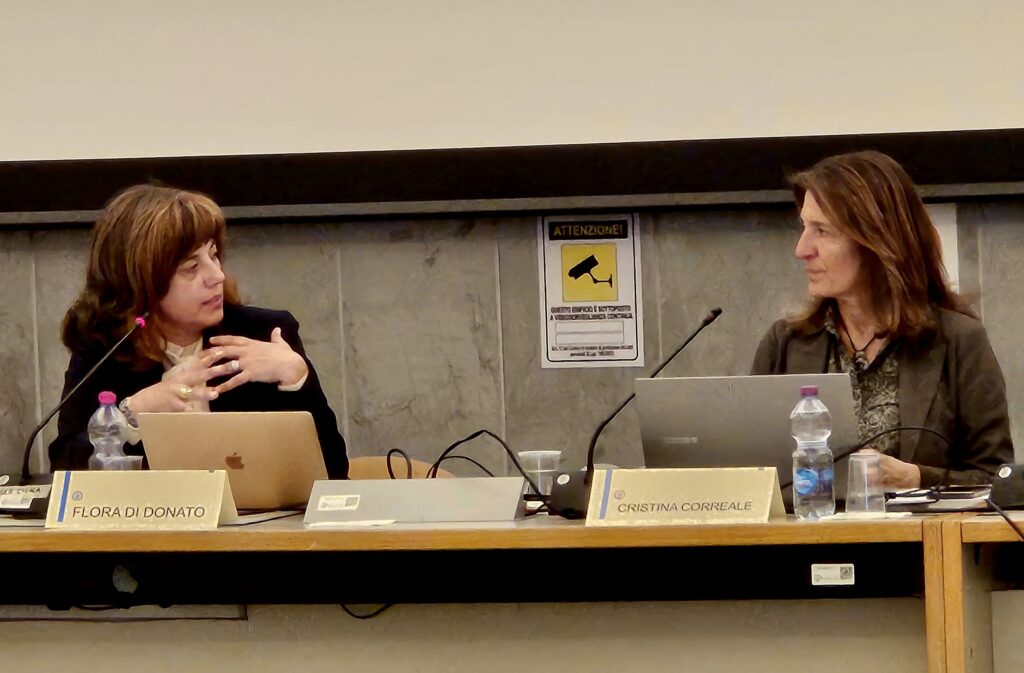
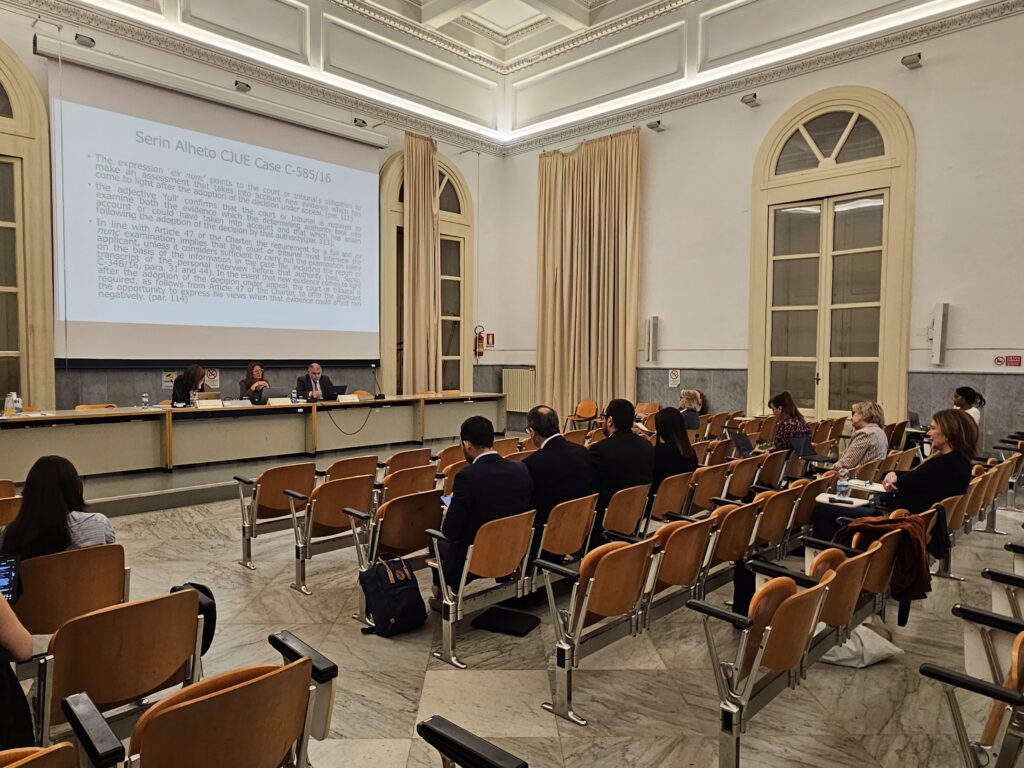
On the second day, the focus shifted from theory to practice. Cristina Correale, a judge from the Tribunal of Naples, began with a detailed explanation of how credibility is assessed in asylum interviews under the EU Pact. She explained both the applicant’s responsibility to support their claim and the judge’s responsibility to cooperate, as defined by the Court of Justice of the EU. Giulia Raciti and Alessia Guarino from the Neapolitan Territorial Commission for International Protection then shared practical insights on asylum procedures and interview techniques, connecting real-world practice with the school’s main topics.
Flora Di Donato came back with the Statelessness Legal Clinic Team—Kim Bertorello, Renato Ianniello, Francesca Trombetti D’Orta, and Cristina Brando—for a session on interviewing stateless individuals in situations where there is no formal documentation, so the person’s story is the only evidence they can provide. Ibtisam Sadegh and Mario Caruana (University of Malta) showed how legal tools like affidavits and interviews can help asylum seekers tell their stories clearly and confidently. Olga Kenton (University of Birmingham) then led a workshop focusing on turning raw interview data into a strong, clear narrative. In the final session, David E. Zammit returned to help participants practice their new storytelling skills together.
More Than a School
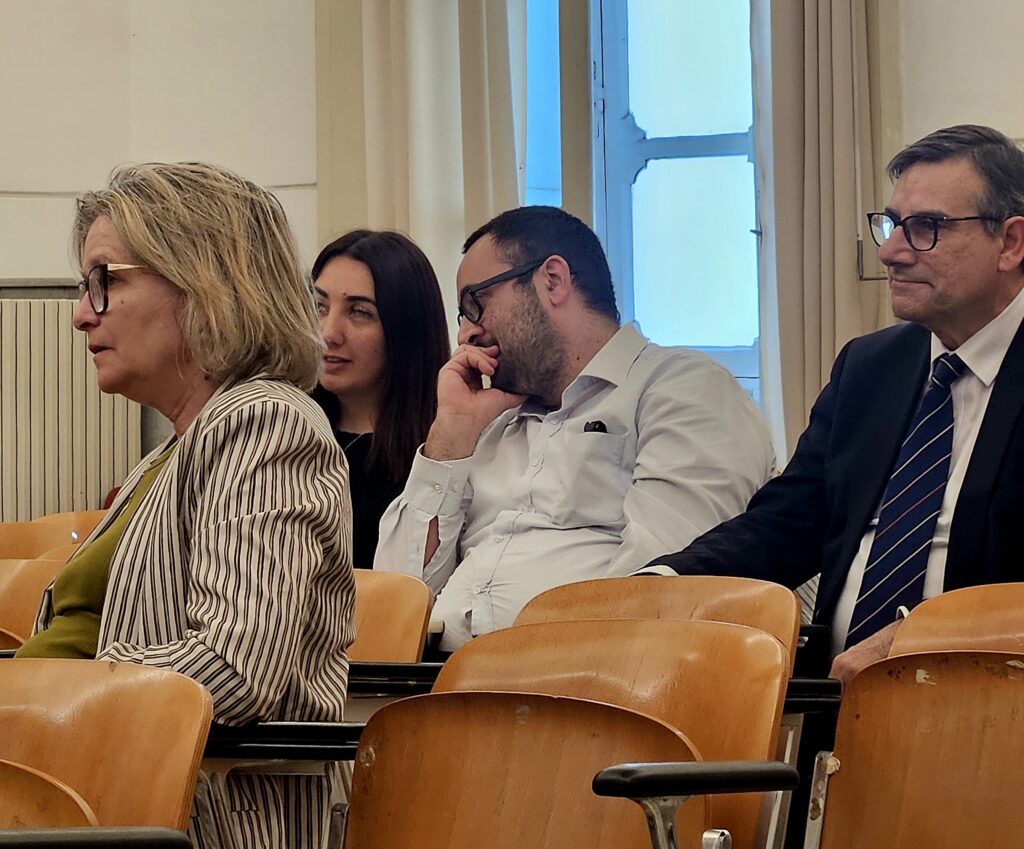
This Training School stood out not only because of its excellent speakers, but also because of the real spirit of collaboration it created. Participants came from many disciplines, countries, and professions. They left with new skills, new colleagues, and a clearer understanding of why this work is important.
Stories are the oldest kind of evidence we know. For people seeking asylum or who are stateless, stories are often the only evidence they have. Events like this show us that listening to these stories and helping people tell them well is not just a nice skill to have. It is a basic part of justice.
Thank you to all the organizers who made this event possible, especially Flora Di Donato and the whole team at the University of Naples Federico II, as well as and colleagues at the University of Malta. Thanks also to every speaker for sharing their expertise and care. Thank you to all the participants for your questions, thoughts, and enthusiasm made these two days truly memorable.
